




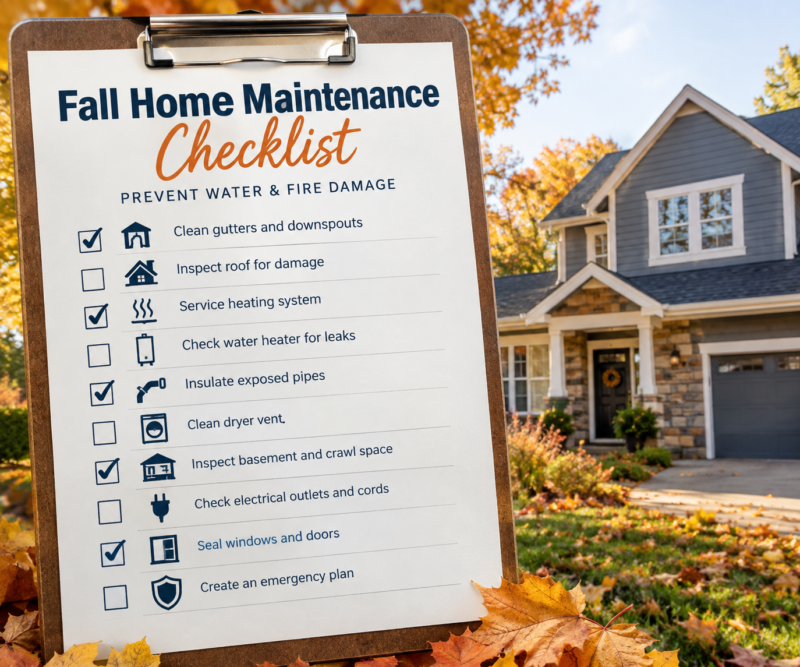
10 Ways to Prevent Water & Fire Damage Before Winter
Fall brings cooler temperatures, changing leaves, and the perfect opportunity to prepare your home for the months ahead. But while most homeowners are focused on yard cleanup and seasonal decorations, some of the biggest threats to their property are hiding in plain sight.
Clogged gutters, aging water heaters, neglected heating systems, and small plumbing leaks can quickly turn into expensive water damage or fire damage emergencies.
The good news? A little preventative maintenance now can help you avoid major restoration expenses later.
At Elements of Restoration, we’ve seen how quickly minor property issues can become serious problems. Whether you’re preparing for freezing temperatures in Colorado and Wyoming, seasonal storms in Texas, or heavy coastal rainfall in South Carolina, taking the right precautions can make a significant difference.
Here are 10 essential fall home maintenance tips to help protect your property from water damage, fire hazards, and unexpected repairs.
1. Clean Your Gutters Before Falling Leaves Cause Water Damage
Gutters might not seem like a major concern, but they’re one of your home’s first lines of defense against water damage.
When leaves, twigs, and debris accumulate, rainwater can overflow and collect around your foundation. Over time, this can lead to basement flooding, crawl space moisture, damaged siding, and even structural deterioration.
Your fall gutter maintenance checklist:
- Remove leaves and debris from gutters and downspouts.
- Check for loose or damaged gutter sections.
- Make sure downspouts direct water away from your foundation.
- Inspect fascia boards for signs of moisture damage.
- Consider gutter guards if your property has significant tree coverage.
Water Damage Warning: Water pooling around your foundation after rainfall may indicate drainage problems that need attention.
2. Inspect Your Roof for Leaks Before Winter Weather Arrives
Your roof takes a beating throughout the year. Summer storms, intense sunlight, wind, and falling branches can weaken roofing materials without leaving obvious signs of damage.
As temperatures drop and seasonal storms arrive, those vulnerabilities can turn into active leaks.
Look for these warning signs:
- Missing, cracked, or curling shingles.
- Damaged flashing around chimneys and vents.
- Water stains on ceilings or attic insulation.
- Sagging roof sections.
- Damp or deteriorating roof decking.
Even a small roof leak can allow moisture to spread through insulation, drywall, and wooden framing.
Pro Tip: Check your attic after heavy rainfall. Damp insulation or dark stains on roof decking may reveal water intrusion before it becomes visible inside your home.
If you discover significant moisture damage, professional water damage restoration may be necessary to properly dry affected materials and prevent further deterioration.
3. Schedule a Heating System Inspection to Reduce Fire Risks
As temperatures cool, homeowners begin using heating systems that may have been sitting idle for months.
Unfortunately, neglected furnaces, fireplaces, and heating equipment can create serious fire hazards.
Before turning up the heat:
- Schedule professional HVAC maintenance.
- Replace dirty furnace filters.
- Keep combustible materials away from heating equipment.
- Inspect fireplaces and chimneys before use.
- Test smoke alarms and carbon monoxide detectors.
- Check electrical connections for visible damage.
According to the National Fire Protection Association (NFPA), heating equipment is a leading cause of residential fires.
Fire Prevention Tip: Keep anything that can burn at least three feet away from heating equipment, including portable space heaters.
A professional inspection can help identify potential safety concerns before your heating system begins working overtime.
4. Check Your Water Heater for Hidden Leaks
Your water heater works year-round, but colder weather can increase the demand for hot water.
Unfortunately, aging water heaters can develop leaks, corrosion, and tank failures that cause substantial water damage.
A leaking water heater can release water into flooring, drywall, nearby storage areas, and surrounding rooms.
Signs your water heater needs attention:
- Rust or corrosion around the tank.
- Moisture collecting beneath the unit.
- Unusual popping or rumbling sounds.
- Inconsistent water temperatures.
- Water stains on nearby walls or flooring.
Check the area surrounding your water heater regularly, especially if it’s located in a closet, garage, attic, or finished living space.
Did You Know? Water heater leaks can go unnoticed for extended periods, allowing moisture to damage surrounding materials and create conditions favorable for mold growth.
If you notice standing water or persistent moisture, address the source immediately and have the affected area evaluated.
5. Protect Exposed Pipes From Freezing Temperatures
Frozen pipes are among the most destructive winter-related plumbing problems.
When water freezes inside a pipe, expanding ice can create enough pressure to cause the pipe to rupture. Once the ice thaws, water can escape rapidly and damage walls, ceilings, flooring, and personal belongings.
Homes in Colorado and Wyoming face particularly significant freezing risks, but unexpected cold snaps can also affect properties in Texas and South Carolina.
Fall plumbing maintenance checklist:
- Insulate exposed pipes in unheated areas.
- Disconnect and drain outdoor hoses.
- Protect exterior faucets.
- Seal openings that allow cold air to reach plumbing.
- Identify the location of your main water shutoff valve.
- Maintain adequate indoor temperatures during freezing weather.
Important: Pipes in crawl spaces, garages, attics, and exterior walls are especially vulnerable.
Taking preventative measures before the first freeze can help reduce the risk of a major water damage emergency.
6. Clean Your Dryer Vent to Help Prevent House Fires
When was the last time you cleaned your dryer vent?
Most homeowners regularly clean the lint trap but forget about the exhaust duct that carries hot air outside.
Over time, lint can accumulate inside the duct, restricting airflow and increasing the risk of overheating.
According to the U.S. Fire Administration, thousands of residential clothes dryer fires occur annually, and failure to clean dryers is a leading contributing factor.
Dryer fire prevention checklist:
- Clean the lint filter after every load.
- Inspect and clean the dryer exhaust duct.
- Check the exterior vent for blockages.
- Avoid overloading your dryer.
- Never leave your dryer running when you’re away or sleeping.
- Have damaged or improperly installed venting corrected.
If clothes take longer than usual to dry or the dryer becomes excessively hot, restricted airflow could be the problem.
Fire Safety Reminder: A clean dryer vent improves airflow and helps reduce the risk of preventable house fires.
7. Inspect Your Basement and Crawl Space for Moisture
Some of the most expensive water damage problems begin in areas homeowners rarely visit.
Basements and crawl spaces are particularly vulnerable to moisture intrusion because they’re located near the ground and often have limited airflow.
Fall rainfall, poor drainage, plumbing leaks, and foundation cracks can introduce unwanted moisture into these spaces.
Watch for:
- Standing water or damp soil.
- Musty odors.
- Water stains on foundation walls.
- Wet insulation.
- Visible mold-like growth.
- Deteriorating wooden supports.
Persistent moisture can damage building materials and contribute to indoor air quality concerns.
Pro Tip: A musty smell in your home may indicate hidden moisture beneath your floors or behind walls.
Professional moisture detection equipment can help identify water intrusion that isn’t immediately visible.
8. Check Electrical Outlets, Cords, and Outdoor Lighting
Fall often means increased electricity usage as homeowners prepare for shorter days, cooler weather, and upcoming holidays.
Unfortunately, damaged electrical components and overloaded circuits can create dangerous fire hazards.
Before installing seasonal decorations or using additional heating equipment:
- Inspect extension cords for fraying or exposed wiring.
- Avoid overloading electrical outlets.
- Replace damaged power strips.
- Keep outdoor electrical connections protected from moisture.
- Use lighting and electrical equipment rated for outdoor use.
- Have frequently tripping breakers evaluated by a qualified electrician.
Never run electrical cords beneath rugs or carpets, where damage and overheating may go unnoticed.
Fire Prevention Tip: If an outlet feels unusually hot, produces a burning smell, or shows discoloration, stop using it and contact a qualified electrician.
9. Inspect Windows, Doors, and Exterior Seals for Water Intrusion
Small gaps around windows and doors can allow more than cold air into your home.
Wind-driven rain can penetrate deteriorating caulking, damaged seals, and poorly maintained exterior trim.
Over time, repeated moisture exposure may cause:
- Rotting wooden frames.
- Damaged drywall.
- Peeling paint.
- Mold growth.
- Stained flooring.
- Hidden deterioration inside wall cavities.
Inspect exterior caulking and weatherstripping before seasonal storms become more frequent.
Pay particular attention to windows exposed to heavy rainfall and doors that open onto decks or patios.
Water Damage Warning: Bubbling paint, soft drywall, or discoloration around windows may indicate water intrusion behind the surface.
10. Create an Emergency Plan Before Water or Fire Damage Happens
Even well-maintained homes can experience unexpected emergencies.
Burst pipes, electrical fires, severe storms, and appliance failures can happen with little warning.
Having a plan can help you respond quickly and reduce unnecessary damage.
Your home emergency preparedness checklist:
- Know how to shut off your home’s main water supply.
- Keep fire extinguishers accessible and learn how to use them safely.
- Test smoke alarms throughout your home.
- Store important documents in a protected location.
- Review your homeowners insurance coverage.
- Photograph valuable belongings for insurance documentation.
- Keep emergency contact information readily available.
- Identify a trusted local restoration company before an emergency occurs.
Remember: When water damage occurs, the longer moisture remains inside your property, the greater the potential for damage to building materials and personal belongings.
Never enter areas affected by fire or flooding until emergency personnel or qualified professionals confirm they’re safe.
What Should You Do If You Discover Water or Fire Damage This Fall?
Sometimes, despite your best efforts, property damage is unavoidable.
A roof leak may go unnoticed until water begins dripping through the ceiling. A burst pipe may flood your basement overnight. An electrical malfunction may cause smoke or fire damage.
When something goes wrong, taking the right steps matters.
If You Discover Water Damage:
- Stop the water source if you can do so safely.
- Avoid standing water near electrical outlets or equipment.
- Document visible damage with photographs.
- Contact your insurance company to understand your coverage and reporting requirements.
- Contact a professional water damage restoration company for assessment, water removal, and structural drying.
If You Experience Fire or Smoke Damage:
- Evacuate immediately and call 911.
- Do not reenter the property until authorities confirm it’s safe.
- Contact your insurance provider.
- Avoid disturbing soot-covered surfaces unnecessarily.
- Arrange for a professional fire and smoke damage assessment.
Fire damage can extend beyond burned materials. Smoke residue, soot, odors, and water used during firefighting may affect additional areas of the property.
Professional restoration services can help assess the damage and determine the appropriate cleanup and recovery process.
Professional Water & Fire Damage Restoration From Elements of Restoration
At Elements of Restoration, we understand that property damage rarely happens at a convenient time.
Whether you’re dealing with a flooded basement, burst pipe, hidden moisture, smoke damage, or mold concerns, our team provides professional restoration services designed to help homeowners and businesses recover.
Our services include:
- Water Damage Restoration: Water extraction, moisture detection, structural drying, and cleanup.
- Flood Damage Cleanup: Removal of unwanted water and cleanup of affected areas.
- Fire & Smoke Damage Restoration: Cleanup of fire-related damage, smoke residue, and affected materials.
- Mold Remediation: Assessment and remediation of mold-affected areas.
- Commercial Property Restoration: Water and fire damage restoration for commercial buildings.
- Reconstruction & Repair Services: Repair and rebuilding of damaged property components.
Our team uses professional restoration equipment and industry-standard techniques to help address damage and support the recovery process.
Areas We Serve
Elements of Restoration proudly provides water damage restoration, fire damage cleanup, mold remediation, and related restoration services across multiple states.
Denver, Thornton & Surrounding Colorado Communities
Serving Denver, Thornton, Westminster, Northglenn, Broomfield, Arvada, Lakewood, Aurora, and surrounding Denver metropolitan communities.
From frozen pipes and basement flooding to fire and smoke damage, our Colorado restoration team helps homeowners and businesses address unexpected property damage.
Grand Junction, Colorado & Surrounding Areas
Serving Grand Junction, Fruita, Clifton, Palisade, Orchard Mesa, and surrounding Western Colorado communities.
Our restoration services include water damage cleanup, fire damage restoration, mold mitigation, and property repairs.
Houston, Bay City & Surrounding Texas Communities
Serving Houston, Bay City, The Woodlands, Sugar Land, Pearland, Katy, League City, and surrounding Southeast Texas communities.
From plumbing leaks and storm-related flooding to fire damage and moisture problems, Elements of Restoration provides professional cleanup and restoration services.
Austin, Hutto & Central Texas
Serving Austin, Hutto, Round Rock, Pflugerville, Georgetown, Cedar Park, and surrounding Central Texas communities.
Our restoration services help property owners recover from water intrusion, flooding, fire damage, and other unexpected property emergencies.
Myrtle Beach & Coastal South Carolina
Serving Myrtle Beach, North Myrtle Beach, Murrells Inlet, Surfside Beach, Longs, and surrounding Grand Strand communities.
Coastal storms, heavy rainfall, humidity, and plumbing failures can contribute to serious moisture problems. Our team provides water damage restoration, fire damage cleanup, and related services for residential and commercial properties.
Rock Springs, Green River & Southwest Wyoming
Serving Rock Springs, Green River, and surrounding Southwest Wyoming communities.
With freezing temperatures and harsh winter weather approaching, protecting your property from frozen pipes, water damage, and fire hazards is especially important.
Elements of Restoration provides water damage cleanup, moisture detection, fire damage restoration, and mold-related services throughout the area.
Don’t Let a Small Fall Maintenance Problem Become a Major Restoration Emergency
A clogged gutter, aging water heater, or neglected heating system might seem like a minor issue today, but small problems can quickly become expensive property damage emergencies.
Taking time to complete your fall home maintenance checklist can help protect your home, reduce potential fire hazards, and minimize the risk of water damage as temperatures change.
And when unexpected damage happens, having a reliable restoration company makes the recovery process easier.
Need Professional Water Damage or Fire Damage Restoration?
Contact Elements of Restoration to discuss your property damage concerns and learn more about our restoration services in Colorado, Texas, South Carolina, and Wyoming.
Protect your property this fall. Prepare today so you’re not dealing with preventable damage tomorrow.