




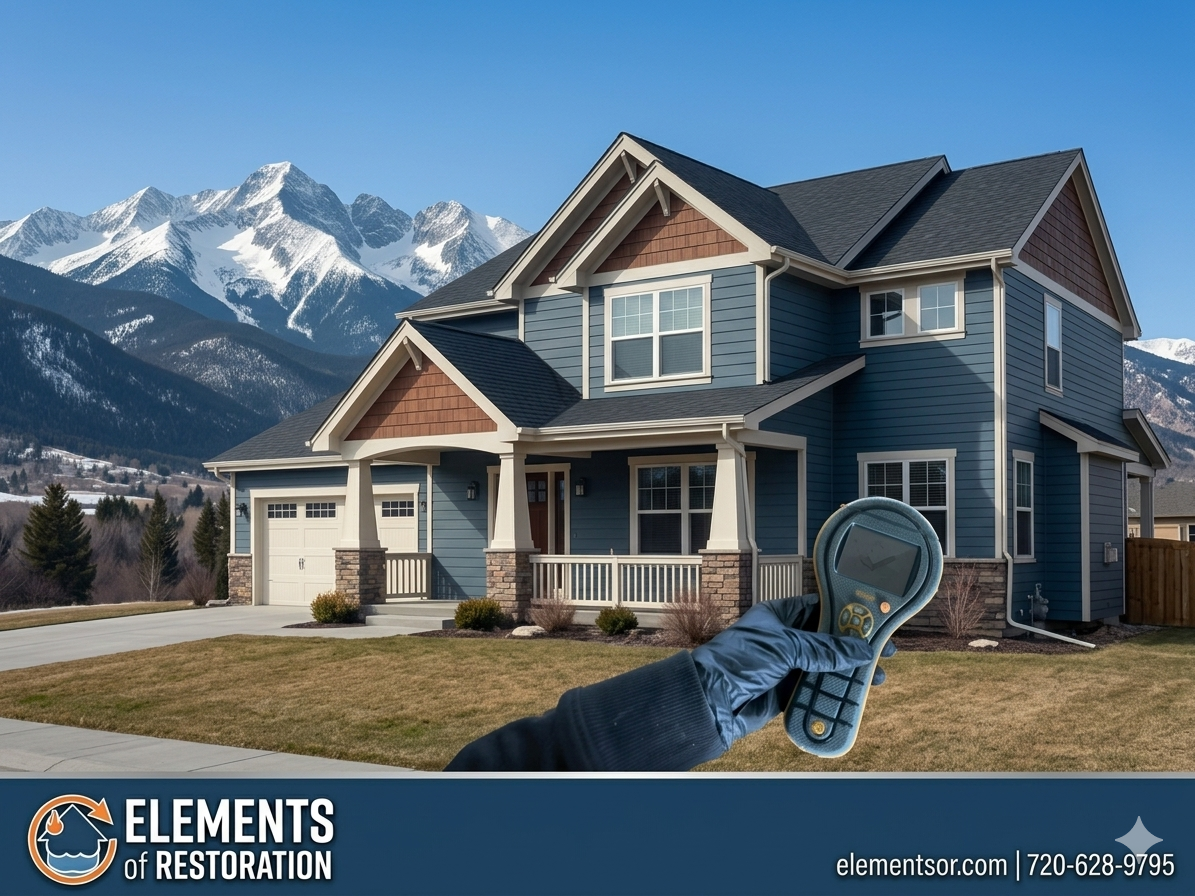
Living in the Mile High City, we often brag about our 300 days of sunshine and our famously “dry” climate. Many homeowners in Denver and Thornton believe that mold is a problem reserved for humid coastal cities like Houston or Myrtle Beach.
At Elements of Restoration, we’re here to clear up that myth. While our outdoor air is dry, the indoor environments of homes in Arvada, Westminster, and Broomfield can become the perfect petri dish for mold growth—often without a single drop of rain.
The “Tight Home” Trap in the Front Range
In a push for energy efficiency, many homes across the Denver Metro area are built or retrofitted to be airtight. While this keeps your heating bills down during a blizzard in Lakewood or Aurora, it also traps moisture inside.
When you have a minor, “silent” leak—perhaps a slow drip under a kitchen sink or a pinhole leak in an upstairs bathroom—that moisture has nowhere to go. In our sealed-up homes, even a small amount of water can raise the relative humidity in a wall cavity or crawlspace enough to trigger mold growth in as little as 24 to 48 hours.
Why “Dry” Colorado Homes Get Mold
There are three specific reasons why mold thrives in our seemingly dry climate:
1. Attic Condensation and Ice Dams
When snow builds up on your roof in Centennial or Littleton, heat escaping from your attic can melt the bottom layer, creating an ice dam. This water often backs up under the shingles and drips into your attic insulation. Because attics are often overlooked, this moisture sits in a dark, warm space, leading to significant mold colonies before you ever see a spot on your ceiling.
2. The “Hidden” Basement Seepage
As the mountain snowmelt begins to saturate the ground in Golden and Wheat Ridge, hydrostatic pressure pushes moisture through tiny, microscopic cracks in your foundation. You might not see standing water, but that “musty” smell in your basement is a clear indicator that mold is active behind your drywall or under your flooring.
3. Temperature Swings
Colorado is famous for 60°F afternoons followed by 20°F nights. These rapid temperature shifts cause condensation to form on the inside of window frames and exterior-facing walls in cities like Northglenn and Commerce City. If that condensation isn’t wiped away, it provides the exact amount of water mold needs to thrive on your drywall.
How We Find the Mold You Can’t See
Because Denver is dry, mold often grows inward rather than outward. By the time you see a black stain on your wall, the problem is likely extensive.
At Elements of Restoration, we don’t guess—we verify. We use advanced diagnostic tools to protect your home:
- Infrared Thermal Imaging: We use IR cameras to find “cold spots” behind your walls that indicate hidden moisture plumes.
- MMS2 Moisture Mapping: Our Hygromaster 2 sensors allow us to measure the moisture content of your studs and subfloors without tearing them apart.
- Air Quality Testing: We can identify elevated spore counts even when the mold is completely hidden from view.
Professional Mold Remediation in Denver & Thornton
If you suspect mold in your home, don’t wait for the “dry air” to fix it. Mold is a structural and a health risk that requires professional, IICRC-certified mitigation.
Elements of Restoration is available 24/7 to provide rapid response across the entire Front Range, from Henderson to Brighton. We handle everything from the initial moisture detection and air scrubbing to the final reconstruction of your home.
Don’t let a hidden leak compromise your home’s health.
📞 Denver 24/7 Emergency Line: 720-628-9795