




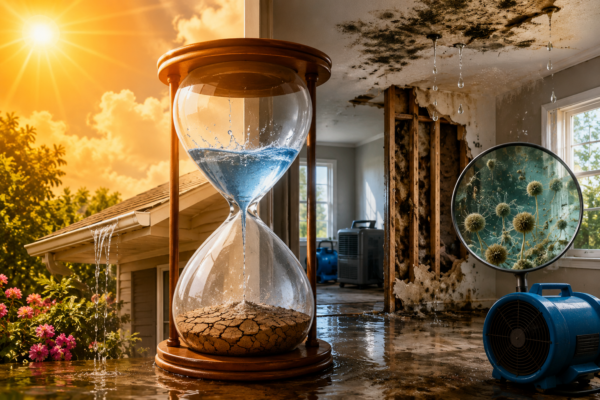
Summer brings sunshine, vacations, and outdoor fun—but it also creates the perfect environment for water damage to spread quickly. While many homeowners focus on heavy rain and flooding, they often don’t realize that high temperatures and humidity can turn a small water problem into a major restoration project in just a matter of days.
Whether your home experiences a burst pipe, roof leak, appliance failure, or storm damage, acting quickly during the summer months can save thousands of dollars in repairs.
Why Heat Makes Water Damage More Dangerous
Hot weather speeds up the evaporation of standing water. While that may sound like a good thing, it actually creates excessive moisture in the air and throughout your home. This moisture seeps into drywall, insulation, wood framing, flooring, and furniture where it often goes unnoticed.
As temperatures rise, so does the rate at which bacteria, mold, and structural deterioration develop.
Even water you can’t see can continue damaging your property long after the visible water has disappeared.
Mold Can Begin Growing Within 24 to 48 Hours
One of the biggest risks of summer water damage is mold growth.
Warm temperatures combined with elevated humidity create ideal conditions for mold spores to multiply rapidly. Once mold begins growing, it can spread behind walls, under flooring, inside insulation, and throughout HVAC systems.
Signs of mold growth include:
- Musty odors
- Dark spots on walls or ceilings
- Peeling paint
- Increased allergy symptoms
- Persistent moisture or condensation
Professional water mitigation removes hidden moisture before mold has a chance to spread.
Humidity Keeps Building Materials Wet
During the summer, outdoor humidity is often extremely high. When a home has experienced water damage, that moisture becomes trapped inside building materials.
Common materials that absorb water include:
- Drywall
- Wood flooring
- Carpet padding
- Insulation
- Cabinets
- Subfloors
Without commercial drying equipment, these materials may remain damp for days or even weeks, allowing additional damage to occur beneath the surface.
Structural Damage Happens Faster Than You Think
Many homeowners believe that once standing water is removed, the problem is over.
Unfortunately, trapped moisture continues weakening your home’s structure.
Water can cause:
- Wood framing to swell and warp
- Drywall to soften and crumble
- Flooring to buckle
- Cabinets to separate
- Nails and fasteners to rust
- Ceiling materials to sag
The longer moisture remains inside your home, the more expensive repairs typically become.
Summer Storms Often Cause Hidden Water Damage
Summer storms don’t always produce obvious flooding.
Wind-driven rain can enter through:
- Damaged roofing
- Missing shingles
- Window seals
- Door frames
- Siding gaps
- Foundation cracks
Many homeowners don’t discover the damage until stains appear weeks later or mold begins growing inside walls.
After severe weather, it’s always a good idea to inspect your property for signs of hidden water intrusion.
Air Conditioners Can Cause Water Damage Too
Your air conditioning system removes moisture from the air every day during the summer.
If the condensate drain becomes clogged or the drain pan cracks, water can overflow into ceilings, walls, or flooring.
Common warning signs include:
- Water around your indoor HVAC unit
- Ceiling stains
- Musty smells near vents
- Higher indoor humidity
- Water dripping from unexpected locations
Routine HVAC maintenance can help prevent these issues before they become costly repairs.
The Importance of Immediate Water Mitigation
Professional water mitigation is about much more than removing standing water.
Restoration specialists use specialized equipment to detect and remove hidden moisture throughout your home.
The restoration process typically includes:
- Emergency water extraction
- Moisture mapping
- Infrared moisture detection
- Commercial air movers
- Industrial dehumidifiers
- Structural drying
- Sanitizing affected areas
- Mold prevention treatments
The sooner mitigation begins, the greater the chance of saving flooring, drywall, cabinets, and personal belongings.
Tips to Prevent Summer Water Damage
While some water damage is unavoidable, homeowners can reduce their risk by taking preventive measures.
Helpful summer maintenance includes:
- Inspect your roof after storms.
- Clean gutters and downspouts regularly.
- Check your air conditioner drain line.
- Repair plumbing leaks immediately.
- Seal windows and doors.
- Inspect your attic for signs of moisture.
- Use a dehumidifier in damp areas.
- Address small leaks before they become major problems.
Don’t Wait to Address Water Damage
Water damage doesn’t improve with time—especially during hot summer weather.
What starts as a minor leak can quickly become mold growth, structural damage, unpleasant odors, and costly repairs. Fast action protects your home, reduces restoration costs, and helps prevent long-term damage.
If you notice signs of water damage after a summer storm, plumbing leak, or HVAC issue, contact a professional water damage restoration company as soon as possible. Early intervention can make all the difference in restoring your property safely and efficiently.
Frequently Asked Questions
How quickly can mold grow after water damage in the summer?
Mold can begin growing within 24 to 48 hours when moisture, warmth, and organic materials are present. Summer heat and humidity can accelerate this process.
Can hot weather make water damage worse?
Yes. High temperatures increase humidity and speed up mold growth while allowing moisture to penetrate deeper into building materials.
Is it safe to dry water damage with household fans?
Small spills may dry with fans, but significant water damage often requires commercial drying equipment and moisture detection to prevent hidden damage and mold growth.
Does homeowners insurance cover summer water damage?
Coverage depends on the cause of the damage. Sudden and accidental events, such as burst pipes or storm-related roof damage, are often covered, while flooding and long-term maintenance issues may require separate coverage or may not be covered.
How long does professional water damage restoration take?
Most drying projects take three to five days, but larger losses involving structural repairs or mold remediation can take longer depending on the extent of the damage.
Areas We Serve
Our water damage restoration team proudly serves homeowners and businesses throughout Denver, Austin, Houston, Bay City, Nashville, Myrtle Beach, Rock Springs, and surrounding communities. We provide professional water extraction, structural drying, mold prevention, storm damage restoration, and complete property restoration services when you need them most.