




It doesn’t always take a hurricane, burst pipe, or major flood to cause serious water damage.
Sometimes, it’s a $20 part.
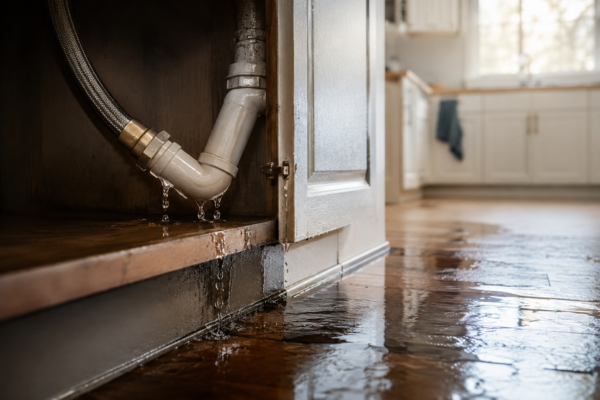
A worn washing machine hose. A loose connection under the sink. A failing toilet supply line. A cracked refrigerator water line. These small components are easy to overlook, but when they fail, water can spread far beyond the room where the problem started.
And if nobody notices right away, a relatively inexpensive repair can quickly become a much larger restoration project.
Small Leak, Big Damage
One of the biggest misconceptions about water damage is that the size of the leak determines the size of the problem.
It doesn’t. Time matters just as much.
A slow leak can continue for days or weeks before there’s an obvious sign of trouble. During that time, moisture may travel beneath flooring, soak into drywall, enter cabinets, saturate insulation, or reach adjoining rooms.
By the time you notice a stain, warped floor, musty odor, or unusually high water bill, the visible damage may only be a small part of the problem.
The Cheap Parts Worth Checking
Many potential sources of residential water damage are connected to ordinary fixtures and appliances you use every day.
Keep an eye on:
- Washing machine supply hoses
- Toilet supply lines and connections
- Refrigerator and ice maker water lines
- Dishwasher supply and drain lines
- Connections beneath kitchen and bathroom sinks
- Water heater connections
- Shower and bathtub seals
- HVAC condensate drain lines
You don’t need to obsess over every connection in your house. But periodically checking these areas can help you spot corrosion, moisture, cracking, bulging hoses, loose connections, or small drips before they become bigger problems.
Why Water Damage Spreads So Quickly
Water rarely stays where you can see it so imagine a small supply line begins leaking beneath a bathroom sink. The cabinet gets wet first, but water can then move into the flooring, behind the baseboards, through the drywall, or even into the room below.
Simply stopping the leak doesn’t necessarily mean everything is dry.
Porous building materials can absorb and retain moisture long after standing water disappears. That’s one reason professional water damage restoration often involves moisture meters and other detection equipment to determine where water has traveled.
When a Small Repair Becomes a Major Restoration
The original plumbing repair might be inexpensive but the resulting property damage may not be.
Depending on where the water travels and how long it remains undetected, restoration could involve removing damaged flooring, opening walls, drying structural materials, treating affected areas, replacing insulation, repairing cabinetry, or addressing microbial growth.
That’s how a seemingly minor household problem can turn into thousands of dollars in damage.
The lesson isn’t that every drip is an emergency. It’s that small leaks deserve attention before they have time to become large ones.
Warning Signs You Shouldn’t Ignore
Water damage doesn’t always announce itself with a puddle on the floor.
Watch for subtle changes around your home, including bubbling or peeling paint, discoloration on walls or ceilings, swollen baseboards, warped flooring, damp cabinets, unexplained musty odors, soft drywall, or the sound of running water when fixtures aren’t being used.
If something suddenly looks, feels, or smells different, it’s 100% worth investigating.
Prevention Is a Lot Cheaper Than Restoration
Take a few minutes every couple of months to look underneath sinks, behind toilets, around appliances, and near your water heater.
Replace visibly damaged hoses or lines. Address small leaks instead of waiting to see if they get worse. Know where your home’s main water shutoff valve is located so you can act quickly if a line suddenly fails.
A little prevention can make a huge difference.
Already Found Water Damage?
If a leak has already spread into your walls, floors, ceilings, or other building materials, drying the visible water may not be enough.
Elements of Restoration provides professional water damage restoration, moisture detection, structural drying, flood cleanup, and related restoration services.
Our team can identify affected areas, determine how far moisture has traveled, and develop a plan to properly dry and restore your property.
Whether the problem started with a major flood or a $20 plumbing part, catching the damage quickly can help keep a small problem from becoming an expensive one.
Contact Elements of Restoration to have the affected area professionally evaluated. Serving Denver and Grand Junction, CO; Houston, TX; Myrtle Beach, SC; and Rock Springs, WY. Not sure if we serve your area? Just reach out today!