




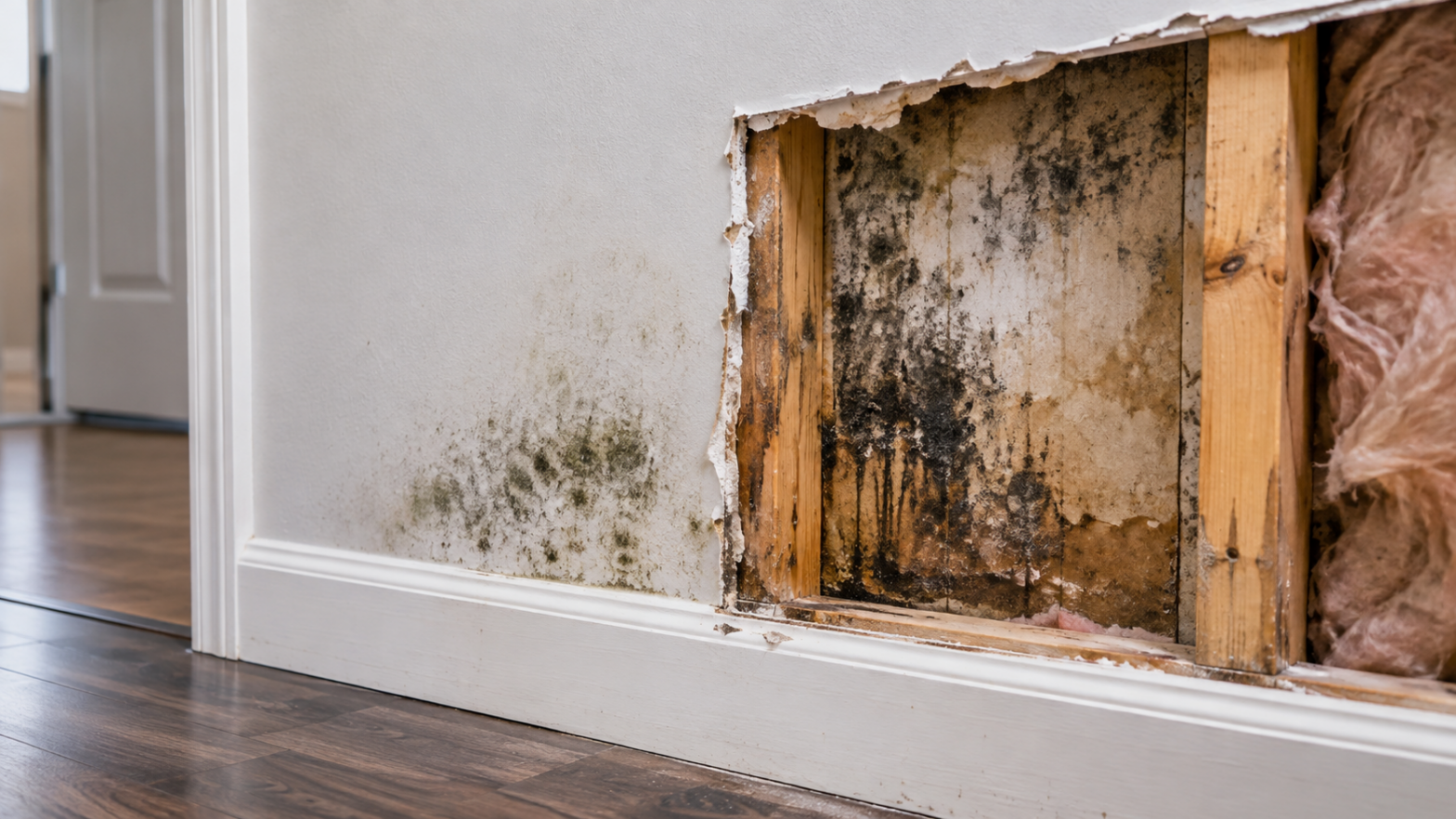
You scrubbed the walls, wiped down the bathroom, and maybe even bought a special mold remover. Everything looked clean. But a few weeks later, those familiar dark spots started appearing again.
Sound familiar?
Recurring mold is a frustrating problem for homeowners, especially when it seems like no amount of cleaning will make it disappear for good.
Here’s what many people don’t realize: Cleaning visible mold doesn’t always eliminate the conditions allowing it to grow.
If mold keeps returning to the same spot, your home may be telling you there’s a bigger moisture problem hiding beneath the surface.
1. You’re Cleaning the Mold, Not Fixing the Moisture Problem
Mold needs moisture to grow. Without addressing the source of that moisture, even a thorough cleaning may provide only temporary results.
Common moisture problems that contribute to recurring mold include:
- Leaking pipes behind walls
- Roof leaks allowing water into attics or ceilings
- Poor bathroom ventilation
- Condensation around windows and HVAC systems
- Water intrusion in basements and crawlspaces
- Previous water damage that wasn’t properly dried
For example, you might repeatedly clean mold around a bathroom ceiling without realizing that inadequate ventilation allows moisture to accumulate after every shower.
The mold disappears temporarily, but the environment remains ideal for new growth.
The solution: Identify and correct the moisture source before focusing on long-term mold prevention.
2. Mold May Be Growing Behind Your Walls
What you see on the surface isn’t necessarily the full extent of the problem.
Mold can grow on hidden building materials, including drywall, insulation, wood framing, and the underside of flooring.
If water has entered a wall cavity through a plumbing leak or roof damage, mold may develop in areas that are difficult to inspect without specialized equipment.
Signs of possible hidden mold include:
- A persistent musty smell
- Discoloration that returns after cleaning
- Peeling or bubbling paint
- Warped drywall or baseboards
- Evidence of previous water damage
- Damp areas that never seem to dry completely
Painting over mold or repeatedly wiping down the surface won’t resolve contamination hidden inside damaged materials.
A professional mold inspection can help determine whether additional investigation or remediation is necessary.
3. Some Materials Can’t Be Cleaned Effectively
Not every mold-affected surface responds to cleaning the same way.
Nonporous materials, such as glass and certain hard surfaces, can often be cleaned successfully when the underlying moisture problem has been corrected.
Porous materials are different.
Drywall, carpeting, insulation, and ceiling tiles can absorb moisture and allow mold to grow within the material.
When contamination becomes extensive, surface cleaning may not be enough.
In some situations, affected materials must be carefully removed and replaced as part of a professional mold remediation process.
This is one reason homeowners sometimes see mold return in exactly the same location despite repeated cleaning.
4. Your Home May Have a Humidity Problem
Not all mold problems begin with a dramatic plumbing leak or flooding event.
Sometimes, the problem is simply too much moisture in the air.
Bathrooms, laundry rooms, basements, and poorly ventilated spaces can experience elevated humidity that encourages mold growth.
The U.S. Environmental Protection Agency recommends keeping indoor humidity below 60%, ideally between 30% and 50%.
When humidity remains elevated, moisture can collect on cooler surfaces, creating conditions where mold can develop.
How to Reduce Indoor Humidity
- Use bathroom exhaust fans during showers.
- Run kitchen ventilation when cooking.
- Repair plumbing leaks promptly.
- Use a dehumidifier in consistently damp areas.
- Make sure dryer vents exhaust outdoors.
- Address condensation around windows and exterior walls.
A simple indoor humidity monitor can help homeowners identify areas where moisture levels may be contributing to recurring problems.
5. Previous Water Damage Wasn’t Completely Dried
One of the most overlooked causes of recurring mold is improperly dried water damage.
Imagine a washing machine hose leaks and water spreads across the laundry room floor.
You mop up the water, run a fan, and everything appears dry the next day.
Problem solved, right?
Not necessarily.
Water can travel beneath flooring, soak into baseboards, and become trapped inside wall cavities.
Even when surfaces feel dry, moisture may remain inside building materials.
Professional water damage restoration involves more than removing visible water. Restoration specialists use moisture detection equipment and controlled drying methods to identify and address moisture that ordinary household fans may not reach.
If your mold problem began after a leak, flood, or plumbing failure, incomplete drying could be contributing to its return.
6. You’re Relying on Bleach or Household Cleaners
Bleach and other household cleaning products are often the first things homeowners reach for when they discover mold.
However, cleaning products alone aren’t a complete solution to recurring mold.
The EPA generally recommends removing mold from hard surfaces with detergent and water, followed by thorough drying. It does not recommend bleach as a routine mold cleanup method.
Even when a product removes visible discoloration, the mold problem can return if the underlying moisture source remains.
It’s also important to remember that dead mold can still cause allergic reactions in some individuals. Simply killing mold without removing the contamination isn’t sufficient.
For larger areas or contamination involving porous building materials, professional remediation may be appropriate.
7. The Original Mold Problem Was Never Fully Addressed
Sometimes mold keeps returning because the initial cleanup didn’t address the full extent of the contamination.
For example, a homeowner may clean visible mold from a closet wall while overlooking moisture-damaged drywall behind shelving.
Or a contractor may replace stained ceiling tiles without repairing the roof leak responsible for the damage.
Effective mold remediation focuses on both the contamination and the conditions that allowed it to develop.
Depending on the situation, this may involve identifying moisture sources, containing affected areas, removing contaminated materials, cleaning salvageable surfaces, and verifying that moisture problems have been corrected.
The goal isn’t simply to make the affected area look better.
It’s to address the problem so the same conditions don’t continue producing new mold growth.
How Do You Know When Mold Requires Professional Remediation?
Not every small patch of mold requires a restoration company.
The EPA indicates that homeowners can often handle mold growth covering less than approximately 10 square feet, provided the situation is straightforward and there aren’t complicating factors.
However, professional assistance may be appropriate when:
- Mold repeatedly returns after cleaning.
- The affected area exceeds approximately 10 square feet.
- Mold appears after significant water damage or flooding.
- You suspect contamination behind walls or beneath flooring.
- The affected area involves HVAC equipment or ductwork.
- Building materials are deteriorating from moisture.
- The source of the moisture cannot be identified.
People with respiratory conditions, mold allergies, or weakened immune systems should take additional precautions and avoid disturbing suspected mold contamination.
When you’re uncertain about the extent of the problem, a qualified professional can help determine the appropriate next steps.
How to Keep Mold From Coming Back
Preventing recurring mold starts with moisture control.
The most effective approach is to identify why mold developed, correct the underlying problem, and ensure affected materials are properly cleaned or removed.
Homeowners should also monitor indoor humidity, inspect plumbing and roofing for leaks, improve ventilation, and respond quickly when water damage occurs.
After a significant leak or flooding event, professional moisture detection and structural drying can help prevent water from remaining trapped in hidden areas.
Remember, mold spores are naturally present in indoor and outdoor environments. Completely eliminating every mold spore from a home isn’t realistic.
The key to preventing recurring mold growth is controlling moisture and addressing existing contamination.
Stop Cleaning the Same Mold Problem Over and Over
If mold keeps appearing in the same location, it’s worth investigating why.
That recurring stain or musty odor could be a sign of excessive humidity, hidden water damage, or moisture trapped inside building materials.
At Elements of Restoration, we help homeowners and businesses address mold contamination and the water damage conditions that contribute to it.
Our restoration services include professional mold remediation, water damage restoration, moisture detection, and structural drying.
Whether you’re dealing with a recent leak or a recurring mold problem that never seems to disappear, our team can help identify the next steps toward restoring your property.
Mold Remediation Services Near You
Elements of Restoration serves residential and commercial property owners across multiple states, including:
Colorado: Denver, Thornton, Boulder, Grand Junction, and surrounding communities.
Texas: Houston, Bay City, Austin, Pflugerville, Georgetown, Hutto, and surrounding areas.
Wyoming: Rock Springs, Green River, and nearby communities.
South Carolina: Myrtle Beach and surrounding communities.
If mold keeps coming back, don’t ignore what your home may be telling you.
Contact Elements of Restoration to learn more about our mold remediation and water damage restoration services.
Visit elementsor.com to get started.